The 8 Rocks of Health: The 8 Habits That Matter Most When You're Busy
When you’re busy, health advice turns into noise. One person says cut carbs, another says fast until noon, another says you need ice baths. You can’t do all of it, so you end up doing none of it.
After coaching more than 300 people, we’ve found the same short list matters for almost everyone. We call it the 8 Rocks of Health. Get these mostly right and the rest is detail.
Why we call them rocks
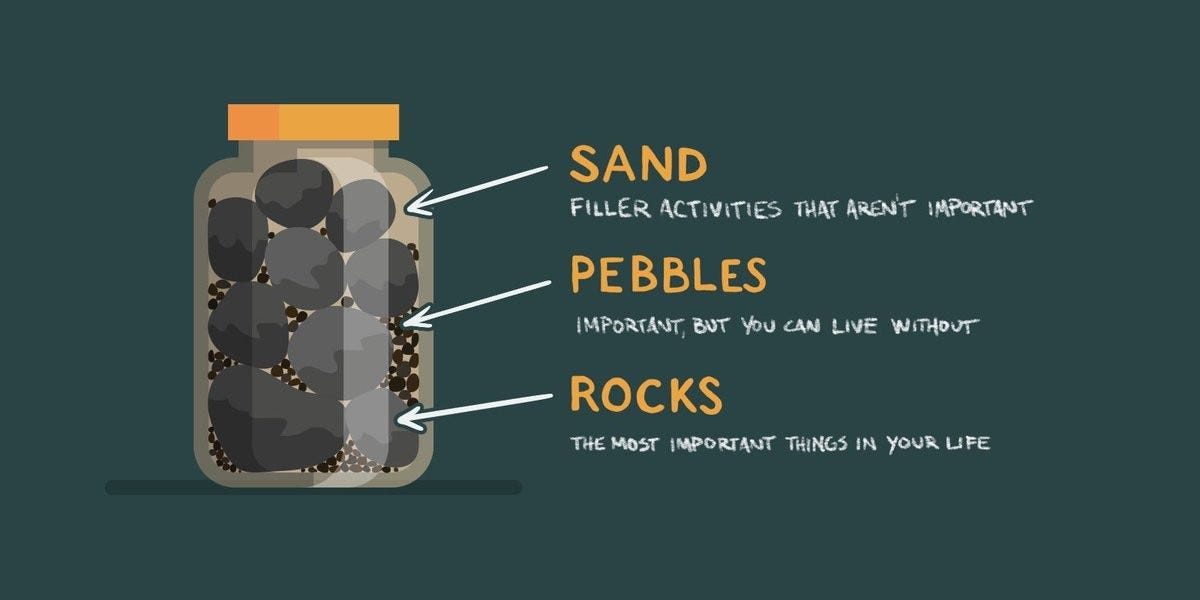
Look at the jar below. You’ve got big rocks, pebbles and sand to fit in it. If you pour the sand in first, the rocks won’t fit. If you put the rocks in first, the pebbles and sand settle in around them.
Your week works the same way. The sand is email, errands and small stuff. It will always fill whatever space you give it. The rocks are the few habits that actually change how you look, feel and age. They have to go in first.
The 8 Rocks, and the minimum that counts
For each one, here’s the smallest version that still works, and roughly what it costs you in time.
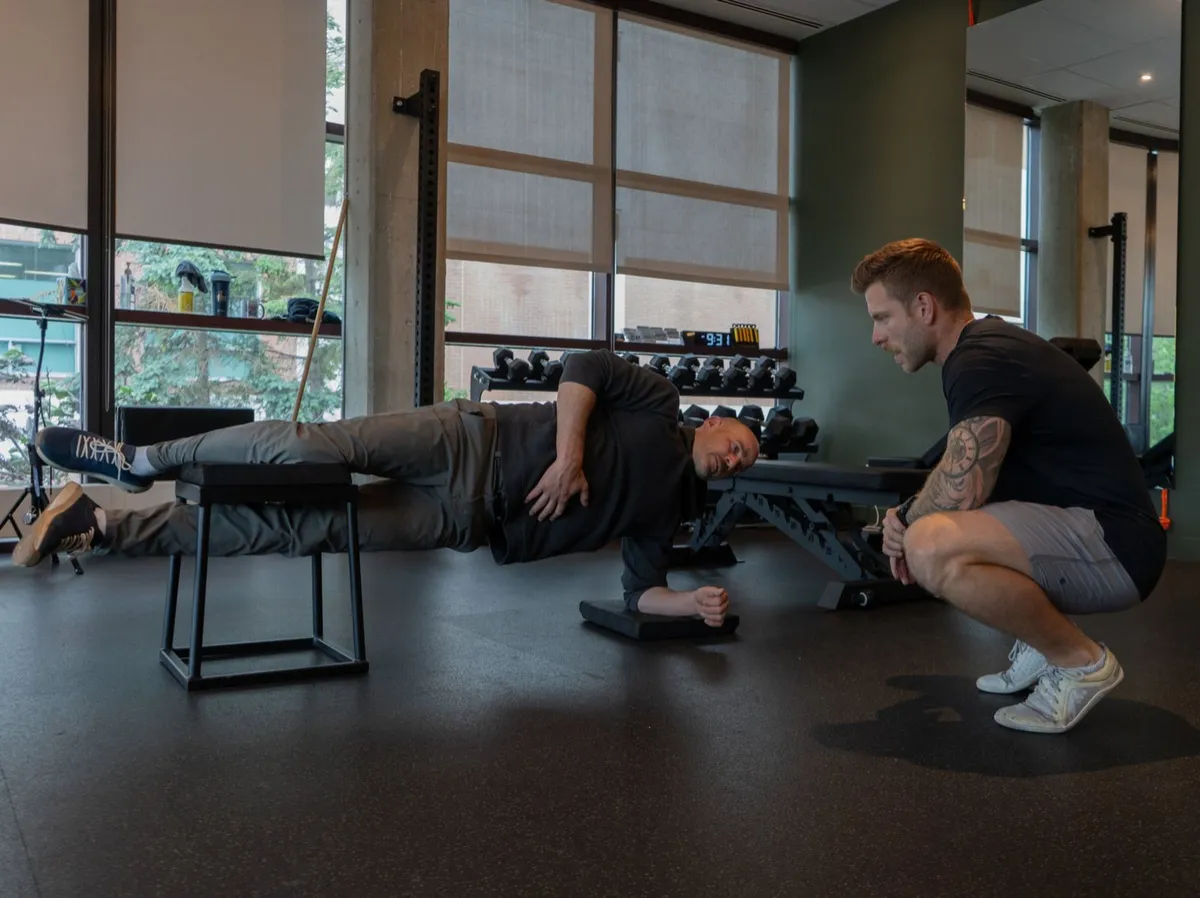
1. Strength training. Two full-body sessions a week, 30–60 minutes each. This protects your muscle, bones and metabolism as you age. About 2 hours a week.
2. Protein. 30–50 g at each meal. That keeps you full, helps you hold onto muscle while you lose fat, and cuts cravings. No extra time if your meals are set up right.
3. Sleep. 7–8 hours, with the same wake-up time every day, weekends included. Poor sleep makes everything else on this list harder. No extra time. Often it means less screen time at night.
4. Daily steps. 7,000–10,000 a day. Walking burns more over a week than most people’s gym sessions and helps keep weight off. Fold it into calls, meetings and getting to places.
5. Water. A glass with every meal and a bottle at your desk. Mild dehydration shows up as fatigue and fake hunger. No extra time.
6. Stress management. 5–10 minutes a day where nothing is coming at you: a walk without your phone, a few slow breaths, a massage, or writing down what’s on your mind before bed. 5–10 minutes a day.
7. Food quality. Most of your food should look like it came from a farm, not a factory: meat, fish, eggs, dairy, fruit, vegetables, potatoes, rice, oats. Aim for about 80% of your meals. No extra time with a meal service.
8. Recovery. At least one real rest day a week, plus some kind of body care like acupuncture, massage or physio. About 1 hour a week.
Add that up and the real time cost is roughly 3–4 hours a week. Most of the list costs nothing but attention.
Don’t start with all eight
Trying to fix everything at once is the fastest way to fix nothing. Pick one or two and get them to the point where you don’t have to think about them. Then add the next.
For most busy clients, we start with these two:
Protein at every meal, because it makes fat loss easier and cuts the 3 p.m. snack attack.
Daily steps, because you can do them in work clothes, on a call, anywhere.
Once those feel normal, usually after three to four weeks, add strength training. Then sleep. Then the rest.
How to use this list
Score yourself on each rock from 1 to 5. Your lowest score that’s also easy to fix is where you start. If you’re not sure, start with protein.
Every other article on this blog goes deeper on one of these rocks. Come back to this list whenever things feel off track. It’s usually one or two rocks that slipped.
Want help putting this into your week?
At Ludus, we build the plan around your schedule, so you know exactly what to do and someone notices when life gets in the way.
Not ready yet? Start with one of our free guides.