Look Better, Feel Healthier or Perform Better? What Each Goal Really Costs
Most people start with “I want to lose weight.” But that usually means one of three different things, and each one asks something different of you.
Being clear on which one you’re after saves you a lot of frustration, because you stop paying for results you don’t actually want.
The three goals
1. Look better. You want to be leaner and see more shape in the mirror. This is the most demanding goal. Getting very lean usually means fewer meals out, more say-no moments, and some days with less energy. Push too hard for too long and strength, sleep and sex drive can dip.
2. Feel healthier. Maybe your blood work came back worse than expected, your doctor mentioned your cholesterol or blood sugar, or you’re tired all the time. Losing belly fat is a health goal here, and it’s often easier than people expect. You don’t need to be shredded. Once your numbers and energy improve, you’ve won.
3. Perform better. Staying injury-free in golf, hockey or squash. Having energy for 12-hour days and still being fun at home. This goal needs you to eat enough and recover well, which is the opposite of an aggressive diet.
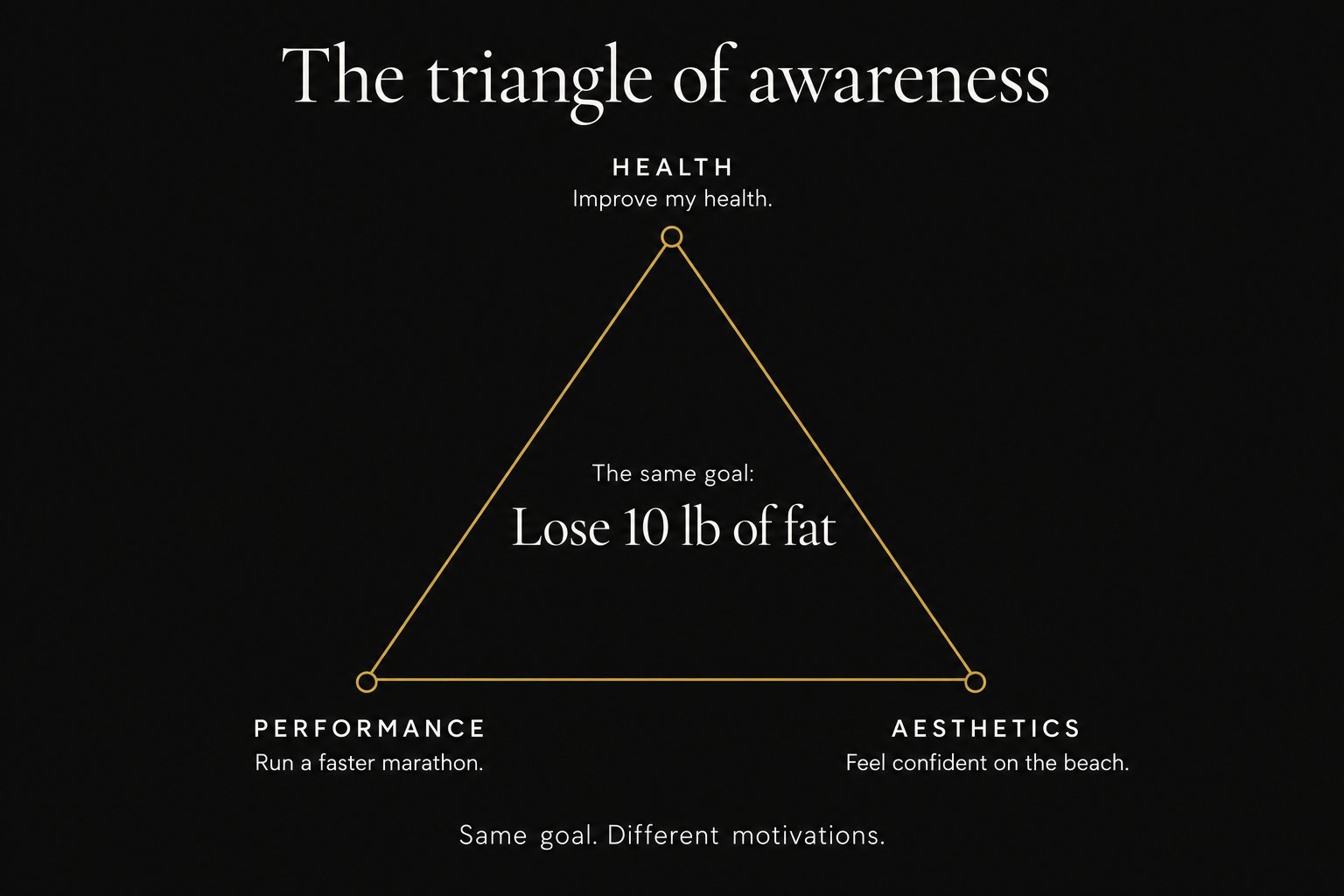
You can improve all three at once. You just can’t max out all three at the same time. Pick the one that matters most this season.
The plan that works for all three
The basics are the same. How hard you push them depends on your goal.
1. Track something. Weigh yourself a few times a week, measure your waist every week or two, and take photos monthly. Without numbers, you’re guessing. 2 minutes a day.
2. Give your eating a simple structure. For example: a protein shake for breakfast, then a lunch and dinner each built around protein, vegetables, and some carbs or fats. Water, black coffee or tea in between. A meal service makes this much easier. No extra time with a service.
3. Lift weights 2–3 times a week. Full-body: squats, deadlifts or hip hinges, presses, rows and lunges. Add a little weight or a rep each week. 2–3 hours a week.
4. Walk 7,000–10,000 steps a day. Walking does more for long-term fat loss than most people’s cardio sessions. Mostly folded into your day.
5. Eat enough protein. About 0.8–1 g per pound of your goal body weight. If you’re aiming for 180 lb, that’s roughly 145–180 g a day. No extra time.
Losing weight isn’t the same as getting lean
If you diet without lifting weights and eating enough protein, a good part of what you lose is muscle. You end up smaller but softer, with a slower metabolism. Lifting and protein are what make sure the weight that comes off is mostly fat.
Be honest about the trade-offs
If you want to be very lean, you’ll need to eat out less, drink less, and say no more often. If you want to be healthier and have more energy, the bar is much lower and you can still enjoy your life. Neither is wrong. Just decide which one you’re signing up for, so you can stop feeling guilty about the one you’re not.
Want help putting this into your week?
At Ludus, we build the plan around your schedule, so you know exactly what to do and someone notices when life gets in the way.
Not ready yet? Start with one of our free guides.