Dietitian vs Nutritionist vs Nutrition Coach | Calgary & Online
Dietitian vs. Nutritionist vs. Nutrition Coach: What's the Difference, and Which One Do You Need?
A practical guide to qualifications, costs, and choosing nutrition support in Calgary, across Canada, and online.
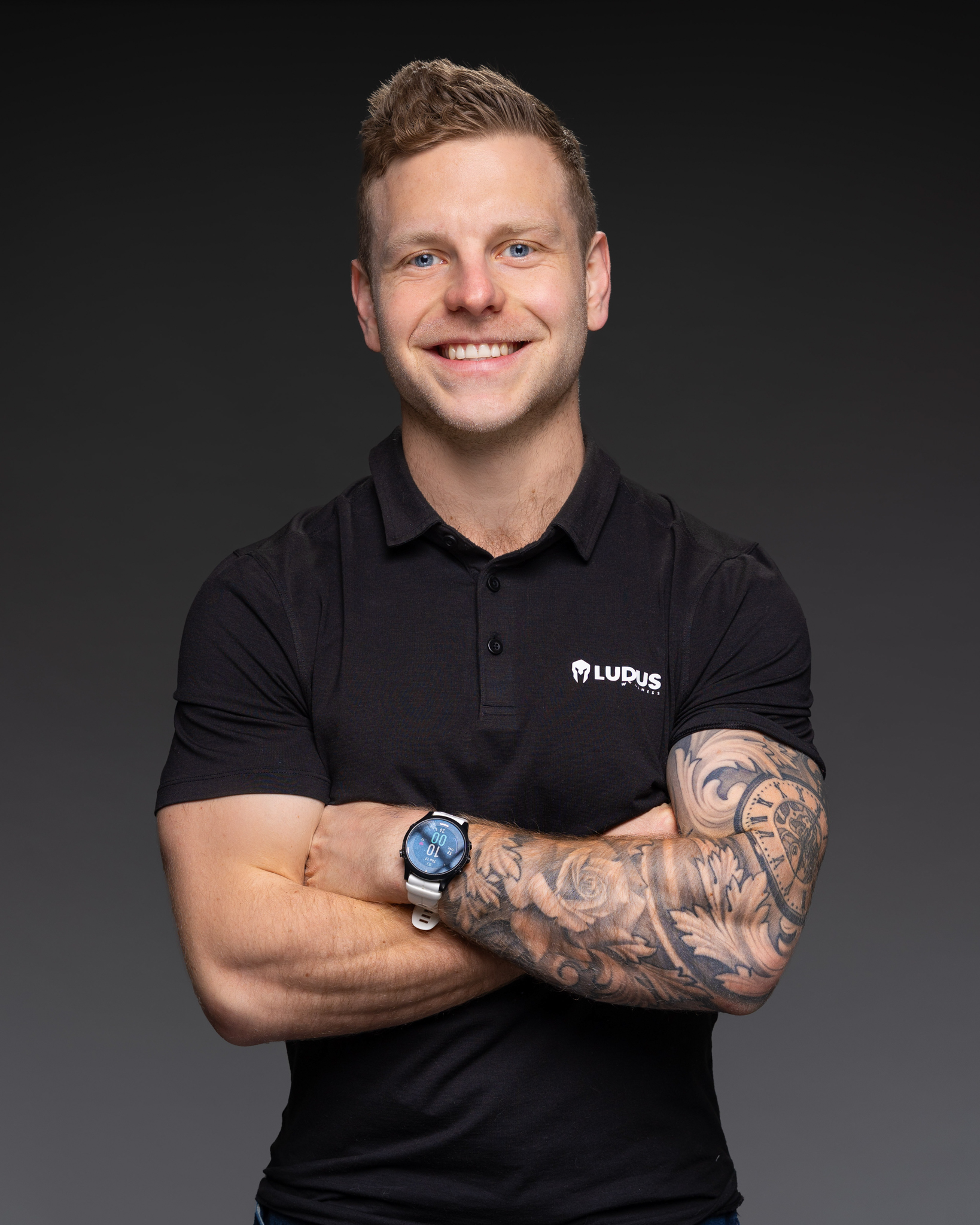
By Liam McVarnock, Founder of Ludus Wellness
Research and pricing reviewed: November 11, 2026
You want to lose 20 pounds, improve your eating habits, or have more energy throughout the day.
You know nutrition matters, but you're not sure who to hire.
Should you see a registered dietitian? A nutritionist? A nutrition coach? And why does one professional charge $150 for an appointment while another charges $400 a month?
The answer depends on your health, your goals, and how much help you need putting recommendations into practice.
Here's the short answer:
Registered dietitian: A regulated healthcare professional qualified to provide nutrition care, including dietary management of medical conditions, general healthy eating, weight management, and sports nutrition.
Registered nutritionist: In Alberta and three other Canadian provinces, this is also a protected professional title associated with regulated dietetic practice. Elsewhere, the meaning varies.
Nutrition coach: Someone who typically helps people improve everyday eating habits, develop practical strategies, and follow through consistently. Qualifications and services vary, and the coaching title itself is not a regulated healthcare credential.
A registered dietitian can also provide excellent habit coaching and ongoing accountability. A nutrition coach isn't automatically the better choice for behaviour change.
The best choice is the person whose qualifications, experience, and services match what you actually need.
This guide explains the differences, compares selected Calgary prices, and helps you choose without paying for more support than necessary.
Disclosure: I founded Ludus Wellness, a Calgary-based nutrition and fitness coaching business offering online services. I also provide nutrition consultations through Vital Performance Care. I'm a Precision Nutrition Level 2 Certified Nutrition Coach, not a registered dietitian or nutritionist. This article includes our services alongside independent providers so you can compare your options.
Dietitian vs. Nutritionist vs. Nutrition Coach: Side-by-Side Comparison
Registered Dietitian | Registered Nutritionist | Nutrition Coach | |
|---|---|---|---|
Regulated healthcare credential? | Yes, in Canada | Yes, where used as a regulated title | Not on the basis of the coaching title alone |
Title protection | Across Canada | Depends on jurisdiction | No single nationally protected coaching title |
Required education | Recognized dietetics education, supervised practical training, and applicable registration requirements | Same regulated profession in Alberta | Varies widely |
Medical nutrition therapy | Yes, within scope and competence | Yes, within scope and competence | Not on coaching qualifications alone |
General weight-loss support | Yes | Yes | Yes, within an appropriate non-clinical scope |
Sports nutrition | Yes | Yes | May provide general performance-nutrition education within competence |
Habit coaching and accountability | Available from many providers | Available from many providers | Often a major focus |
Typical service format | Consultations, follow-ups, or ongoing programs | Consultations, follow-ups, or ongoing programs | Consultations, packages, or ongoing coaching |
Insurance coverage | May qualify under dietitian benefits | May qualify under applicable regulated-provider benefits | Usually not under dietitian-specific benefits |
Professional-title rules differ across Canada and the U.S. The table describes broad distinctions, not the qualifications of every individual using these titles.
One important point: a professional qualification and a coaching service are not the same thing.
A registered dietitian describes someone's regulated professional status. Ongoing nutrition coaching describes the type of support someone offers.
A dietitian can provide ongoing coaching. A nutrition coach can have substantial training and experience without being a registered healthcare professional.
Understanding that difference makes it easier to compare services fairly.
Just Want to Lose 20 Pounds?
If you're generally healthy and looking to improve your eating habits, both a registered dietitian and an appropriately qualified nutrition coach may be suitable.
If you mainly need an assessment and recommendations, consider a one-off appointment.
If you want someone reviewing your food logs, adjusting your strategy, and helping you follow through every week, look for a service offering ongoing coaching.
If you have a medical condition that affects your nutritional needs, start with a registered dietitian.
How Much Does a Dietitian or Nutrition Coach Cost in Calgary?
There isn't one standard price.
Fees depend on the professional, appointment length, specialization, and whether you're purchasing individual consultations or ongoing support.
A 60-minute dietitian assessment and a monthly nutrition coaching membership are different services. Comparing the prices without considering what they include can be misleading.
Selected published Calgary dietitian prices
Provider | Initial appointment | Published price (CAD) |
|---|---|---|
60 minutes, virtual | $135 | |
60 minutes | $145 | |
60 minutes | $160 | |
60 minutes | $180 |
Prices were checked against publicly available provider websites in November 2026. These are selected examples, not a measured Calgary average. Confirm current fees, taxes, appointment formats, and inclusions before booking.
Follow-up appointments may be shorter and less expensive than initial assessments.
Some providers offer packages or ongoing services. Others primarily work through individual appointments.
What does nutrition coaching with Ludus Wellness cost?
We currently offer two types of support.
Option 1: Individual nutrition consultations
Through Vital Performance Care, an individual nutrition appointment with Liam costs $110 for 45 minutes.
This can be appropriate if you want to review your current eating habits, ask questions, identify some priorities, and implement the recommendations independently.
You can book another appointment when needed without purchasing a monthly coaching membership.
Option 2: Ongoing nutrition coaching
Through Ludus Wellness, ongoing coaching costs $400 CAD per month, plus applicable taxes.
It includes:
Personalized nutrition guidance and agreed goals
Weekly reviews of food logs, habits, and progress
Adjustments to your strategy as needed
Messaging support through the Ludus App
A 30-minute coaching call every two weeks
A Cronometer Gold subscription
There is a three-month minimum commitment. We generally recommend considering a six-month timeframe, depending on your goals and starting point.
Six months at the current rate costs $2,400 CAD before applicable taxes.
This isn't equivalent to purchasing one dietitian consultation. You're paying for continuing reviews, practical support, and accountability over time.
Neither format is automatically better. The right amount of support depends on what you actually need.
Not sure which option fits? Book a free 25-minute consultation and we'll help you decide.
What's the Difference Between a Dietitian and a Nutritionist in Alberta?
In Alberta, dietitian and nutritionist are both protected professional titles.
The College of Dietitians of Alberta regulates professionals authorized to use titles including:
Registered Dietitian
Dietitian
Registered Nutritionist
Nutritionist
RD
Someone with a general nutrition coaching certificate cannot automatically call themselves a nutritionist in Alberta.
The College establishes education, registration, professional practice, and accountability requirements.
This is important because much of the nutrition information available online comes from other provinces or the United States, where the rules are different.
If you're searching for a dietitian or nutritionist in Calgary, check whether the individual is registered with the College.
You can verify credentials using the College of Dietitians of Alberta Public Register.
Professional registration establishes that someone meets the relevant requirements. Their particular experience still matters.
For example, someone specializing in digestive disorders may have a different area of expertise from someone working primarily with endurance athletes.
Are Dietitians and Nutritionists Regulated Differently Across Canada?
Yes.
The title "dietitian" is protected across all 10 Canadian provinces. The standalone title "nutritionist" is protected in four: Alberta, Quebec, Nova Scotia, and Prince Edward Island.
Here is the provincial breakdown.
Province | Dietitian protected? | Nutritionist protected? |
|---|---|---|
Alberta | Yes | Yes |
British Columbia | Yes | No |
Saskatchewan | Yes | No |
Manitoba | Yes | No |
Ontario | Yes | No |
Quebec | Yes | Yes |
New Brunswick | Yes | No, not as a standalone title* |
Nova Scotia | Yes | Yes |
Prince Edward Island | Yes | Yes |
Newfoundland and Labrador | Yes | No |
*New Brunswick protects specific professional designations containing "nutritionist," including Registered Dietitian-Nutritionist. Its rules shouldn't be interpreted as permitting unrestricted use of those designations.
The Yukon, Northwest Territories, and Nunavut have different regulatory arrangements. Individuals seeking regulated dietetic care should confirm the applicable requirements for their territory.
Why does the province matter?
Imagine you're comparing two professionals online.
One is a nutritionist in Calgary. The other is a nutritionist in Toronto.
In Calgary, the title indicates a regulated professional designation that can be verified through the College of Dietitians of Alberta.
In Ontario, the standalone word nutritionist doesn't establish a particular education or regulated professional status.
The Ontario provider might be highly qualified. They might even be a registered dietitian who chooses to describe their services using that word.
But you cannot establish their qualifications from the title alone.
The practical takeaway: Look for a verifiable professional designation and relevant experience, rather than assuming a particular job title means the same thing everywhere.
For additional information, see Dietitians of Canada's explanation of protected titles.
What About Dietitians and Nutritionists in the United States?
The United States has its own credentialing and licensing system.
Registered Dietitian (RD) and Registered Dietitian Nutritionist (RDN) are equivalent national professional credentials awarded through the Commission on Dietetic Registration.
These credentials require recognized education, supervised practical experience, successful completion of an examination, and ongoing professional requirements.
However, individual states regulate professional practice and licensing.
Some states protect additional titles such as Licensed Dietitian Nutritionist or Certified Dietitian-Nutritionist. Restrictions on using the title nutritionist and providing certain individualized nutrition services vary by state.
That means:
RD and RDN are established national credentials.
State licensing requirements may also apply.
The standalone word nutritionist does not establish a consistent qualification across all states.
Nutrition coaching certifications do not automatically authorize someone to provide regulated dietetic services.
If you're American and considering a nutrition professional online, verify their credentials and any licensing requirements in your state.
You can learn more through the Commission on Dietetic Registration and the Academy of Nutrition and Dietetics.
Can You Work With a Nutrition Coach Online From Another Province or Country?
Online nutrition coaching makes it possible to work with someone without attending a physical clinic.
At Ludus Wellness, our nutrition coaching is delivered remotely. Clients can receive guidance, submit food logs, complete check-ins, and communicate with their coach from wherever they are.
However, online delivery does not mean professional regulations disappear at provincial or international borders.
The services a provider can legally deliver may depend on where the client lives, where the practitioner operates, and the nature of the advice being provided.
This is particularly important when the work involves medical conditions, medical nutrition therapy, or protected professional titles.
Our service focuses on general nutrition education, everyday habits, body-composition goals, and ongoing accountability within an appropriate non-clinical scope.
Availability is subject to the requirements that apply where you live.
If a prospective client needs regulated clinical nutrition care, we recommend an appropriately qualified professional authorized to provide that care.
What Does a Registered Dietitian Actually Do?
A registered dietitian assesses nutritional needs and provides evidence-informed nutrition recommendations.
Dietitians work in hospitals, community healthcare, private practices, sports organizations, research, and many other settings.
Their expertise isn't limited to treating medical conditions.
Medical nutrition care
A registered dietitian with the relevant experience may help someone manage nutrition-related needs associated with:
Diabetes
Irritable bowel syndrome (IBS)
Celiac disease
Kidney disease
Cardiovascular disease
Food allergies
Nutritional deficiencies
Eating disorders, in collaboration with appropriate healthcare professionals
Medical nutrition therapy involves using nutrition interventions to help manage or treat particular medical conditions.
A nutrition coaching certification alone doesn't qualify someone to provide that care.
If you're dealing with a complex medical condition, a registered dietitian with suitable expertise is generally the appropriate professional to start with.
Weight management and general healthy eating
Dietitians also help people who are generally healthy but want to lose body fat, improve their eating patterns, build muscle, or feel more energetic.
For example, a dietitian might review your existing diet, help identify nutritional gaps, estimate appropriate intake targets, or develop recommendations that fit your schedule.
Some dietitians also offer regular check-ins, food-log analysis, and ongoing accountability.
Sports nutrition
You can also work with a dietitian to support running, cycling, strength training, or other athletic goals.
A sports dietitian might help you understand fueling requirements, carbohydrate intake, race-day nutrition, and recovery.
If you're comparing providers for sports performance, look for relevant practical experience alongside their professional credentials.
What Does a Nutrition Coach Actually Do?
Nutrition coaching usually emphasizes the practical side of improving your eating habits.
For example, imagine you're a business owner who wants to lose 20 pounds.
You work long hours, attend several business dinners every week, and frequently travel.
You understand that your food choices matter, but consistently applying good habits is difficult.
You don't necessarily need someone to tell you that protein, vegetables, and an appropriate calorie intake are important.
You need a strategy that works when you have a 7 a.m. meeting, miss lunch, and end up at a restaurant that evening.
That's where ongoing coaching may help.
Depending on their qualifications and services, a nutrition coach might help you:
Understand and record your current eating habits.
Establish manageable nutrition priorities.
Find reliable meals for busy working days.
Develop practical approaches to restaurants and travel.
Build consistent protein, fibre, and other useful dietary habits.
Review progress and adjust routines over time.
Stay accountable to agreed goals.
It's important to distinguish this kind of support from clinical nutrition treatment.
A nutrition coach should work within their qualifications and refer clients to appropriate healthcare professionals when their needs fall outside that scope.
What qualifications should a nutrition coach have?
There isn't a single qualification that every nutrition coach must hold.
Some have completed extensive education and supervised training. Others have private certifications, degrees in related fields, or considerable practical experience.
At Ludus, our coaches hold nutrition coaching certifications, including Precision Nutrition qualifications.
When comparing coaches, ask what they studied, how much experience they have, what their service involves, and when they refer clients to other professionals.
Credentials matter. So does the quality and appropriateness of the support.
What About Holistic Nutritionists, Health Coaches, and Personal Trainers?
These are additional terms you may encounter.
A holistic nutrition practitioner may have studied through a private training institution. A health coach may focus on health behaviours, sleep, movement, and other lifestyle factors. A personal trainer may also provide general nutrition education alongside exercise coaching.
Those backgrounds can be useful, but the titles alone do not establish registration as a dietitian.
In provinces where nutritionist is protected, practitioners must also respect local title restrictions regardless of the name of their certification.
The key is to verify the person's qualifications and ensure the service matches your needs.
Which Nutrition Professional Should You Choose?
Here are some practical examples.
Your situation | A sensible starting point |
|---|---|
You have IBS, celiac disease, or complex digestive symptoms | Registered dietitian with relevant clinical experience |
You need nutritional care for diabetes, kidney disease, or another medical condition | Registered dietitian and your healthcare team |
You're generally healthy and want to lose 20 pounds | Registered dietitian or qualified nutrition coach |
You understand nutrition but struggle with consistency | A provider offering regular habit coaching and accountability |
You're training for a marathon or triathlon | Sports dietitian or suitably qualified performance nutrition coach, depending on your needs |
You need help with disordered eating | Dietitian experienced in eating disorders and appropriate clinical support |
You have a few nutrition questions and are comfortable working independently | A single consultation may be enough |
You want someone reviewing your food logs and helping you adapt week to week | An ongoing nutrition service with those features included |
Example: A busy professional trying to lose 20 pounds
You're reasonably healthy, but work and travel have gradually affected your eating habits.
A dietitian or appropriately qualified nutrition coach could both help.
The deciding factor may be how much ongoing support you want.
If you mainly need an assessment and recommendations, an individual consultation could be sufficient.
If you want regular reviews, accountability, and help adjusting your habits around business dinners and travel, ongoing coaching may be worth considering.
Example: A recreational athlete who wants better performance
You already train consistently and understand the fundamentals of eating well.
You may benefit from a sports nutrition assessment to clarify your fueling strategy.
If you're comfortable applying recommendations independently, there's no automatic reason to purchase a monthly coaching membership.
Example: Someone managing a medical condition
You're experiencing ongoing digestive symptoms and want to identify which foods may be contributing.
A registered dietitian with relevant expertise, working alongside your healthcare team as appropriate, should be the starting point.
This isn't an appropriate situation for an unregulated coach to independently prescribe treatment or an elimination diet.
Do You Really Need Ongoing Nutrition Coaching?
Not everyone does.
Recently, I worked with someone who had a strong background in competitive sport and already understood many fundamental nutrition principles.
After reviewing their habits, discussing their goals, and identifying some adjustments, I felt they had the knowledge and motivation to implement the changes independently.
Rather than automatically recommending a monthly membership, I suggested they practise those changes and return for another consultation if needed.
That's how I believe this decision should work.
Some clients benefit from frequent reviews, clear targets, and someone helping them adapt when life gets busy.
Others need a good conversation, a useful starting plan, and the independence to take it from there.
The objective shouldn't be to keep someone paying for coaching indefinitely.
It should be to help them develop the skills and confidence to manage their nutrition more effectively.
What Does Ongoing Nutrition Coaching With Ludus Look Like?
Here's an example of how our service operates.
1. Understand your goals and starting point
We begin by discussing what you want to achieve, why it matters, your current habits, and the constraints of your lifestyle.
We review information such as your food records, activity, sleep, training demands, and schedule.
The starting point matters because two people who both want to lose 20 pounds may need very different strategies.
2. Build a practical plan
Rather than changing everything at once, we identify a few manageable priorities.
For instance, if your protein intake is well below what would suit your goals, we might start by improving breakfast and lunch.
As those changes become consistent, we can build on them.
Your program should fit your actual working week, not an ideal schedule you rarely experience.
3. Review your progress
You record your food, complete a brief weekly check-in, and receive feedback from your coach.
We review the information alongside relevant progress measures.
Depending on your goals, those could include body weight, waist measurements, energy, training performance, and how consistently you're following the habits you've chosen.
The purpose isn't to grade your food choices as good or bad.
It's to understand what's happening and identify useful changes.
4. Adjust the plan around real life
When you're travelling, eating out frequently, or entering a demanding work period, we help you adjust your approach.
That could mean planning reliable restaurant orders, finding convenient high-protein meals, or simplifying what you're tracking.
As you build experience, the goal is to become increasingly capable of making those decisions yourself.
Do you have to track your food?
For our ongoing nutrition coaching program, yes. We ask clients to be willing to record what they eat and drink so that we can give informed feedback.
You don't need perfect records. You do need to be willing to participate in the process.
Not every dietitian or nutrition coach uses food tracking, and it won't be appropriate for every individual.
If tracking is unsuitable for your health or circumstances, we'll discuss whether another service or practitioner would be a better fit.
Can You Use Health Benefits for a Dietitian or Nutrition Coach?
That depends on your insurance provider, jurisdiction, and plan.
In Canada
Some employer health insurance plans cover registered dietitian services.
Coverage may include annual limits, requirements for receipts, or other conditions.
Nutrition coaching from someone who is not a registered dietitian generally does not qualify under dietitian-specific insurance benefits.
Some spending accounts may cover coaching, depending on their rules, but reimbursement isn't guaranteed.
Ludus does not bill its nutrition coaching as registered dietitian care.
If you're considering claiming a service, confirm eligibility with your benefits provider before booking.
In the United States
Insurance coverage for dietitian services depends on the health plan, professional credentials, the reason for treatment, and other requirements.
For example, Medicare covers certain medical nutrition therapy services for eligible beneficiaries, including people with diabetes or kidney disease who meet its conditions.
General wellness or nutrition coaching should not be assumed to qualify for the same benefits.
Check your plan and the provider's eligibility before purchasing services.
Are there free or publicly funded dietitian services in Alberta?
Yes.
Albertans can contact Health Link at 811 for nutrition information and access to registered dietitian services.
There are also publicly funded programs and nutrition resources through Alberta Health Services and other healthcare organizations.
If you need clinical nutrition advice, these services may be a useful starting point before paying privately.
Learn more about Alberta's Health Link nutrition services.
Questions to Ask Before Hiring a Nutrition Professional
Before choosing a dietitian, nutritionist, or nutrition coach, consider asking:
What qualifications do you hold? Are you registered with a professional regulatory body, if applicable?
Have you worked with people who have goals similar to mine?
What does the initial assessment involve?
What will I receive after the appointment? Recommendations, a written plan, follow-up support, or something else?
How will we monitor progress?
What's the total cost, including follow-ups and commitments?
When would you refer me to another healthcare professional?
A good practitioner should be able to explain what they do, what they don't do, and what working together will require from you.
Frequently Asked Questions
Is a nutritionist the same as a dietitian?
In Alberta, Quebec, Nova Scotia, and Prince Edward Island, nutritionist is a protected professional title associated with regulated dietetic practice. Elsewhere, the standalone title may not carry the same requirements. Always verify qualifications.
Is a nutrition coach a regulated professional?
Nutrition coaching itself is not a single regulated healthcare profession in Canada or the United States. Individual coaches may hold additional regulated qualifications, so check their credentials and the services they provide.
Should I see a dietitian or nutrition coach to lose weight?
Both may be appropriate for generally healthy adults seeking weight-management support. A dietitian is the more appropriate starting point when clinical nutritional needs are involved. For everyday habit changes, compare the provider's experience and how much continuing support they offer.
How do I find a registered dietitian near me?
Search the professional regulatory body's directory for your province or state. In Alberta, use the College of Dietitians of Alberta Public Register. You can also ask your physician or healthcare provider for recommendations.
Can I see a registered dietitian without a doctor's referral?
Many private dietitians accept direct bookings. Insurance plans and publicly funded programs may have different referral requirements.
Can I work with a nutrition coach remotely?
Many nutrition coaching services operate online. However, providers must ensure their services comply with the applicable rules in the client's jurisdiction. Remote delivery does not automatically authorize regulated clinical practice.
Is ongoing coaching worth $400 a month?
That depends on what you're buying and what you need. If you want weekly reviews, accountability, and help adjusting your habits, ongoing coaching may be valuable. If you're capable of implementing recommendations independently, a single consultation may be sufficient.
Choosing the Right Nutrition Support
You don't need to hire the most expensive professional or sign up for the most comprehensive package.
You need someone whose qualifications and services fit your circumstances.
If you're managing a medical condition, start with an appropriately qualified registered dietitian.
If you're generally healthy and want to improve your eating habits, lose body fat, or support athletic performance, a registered dietitian or appropriately qualified nutrition coach may both be suitable.
And if you already have the knowledge and motivation to make changes independently, one good consultation might be all you need.
At Ludus Wellness, we help busy professionals, business owners, recreational athletes, and other motivated individuals develop practical nutrition habits around real life.
Our coaching is delivered online, with a focus on clear priorities, regular feedback, and helping people follow through.
If you're unsure what support makes sense, start with a complimentary consultation. We'll discuss your goals, explain our services, and help you decide whether we're the right fit.
About the Author
Liam McVarnock is the founder of Ludus Wellness, a Calgary-based nutrition and fitness coaching business. He is a Precision Nutrition Level 2 Certified Nutrition Coach and has worked as a personal trainer since 2018.
His work focuses on body composition, strength, sports performance, and helping clients develop healthier routines around demanding careers, travel, and family life.
Liam is not a registered dietitian or nutritionist and does not provide medical nutrition therapy.
Sources and Research Notes
Professional regulation and credentialing:
Pricing examples were checked against individual Calgary providers' websites in November 2026. Published prices and services may change.
This article provides general educational information and is not individualized medical or legal advice.